
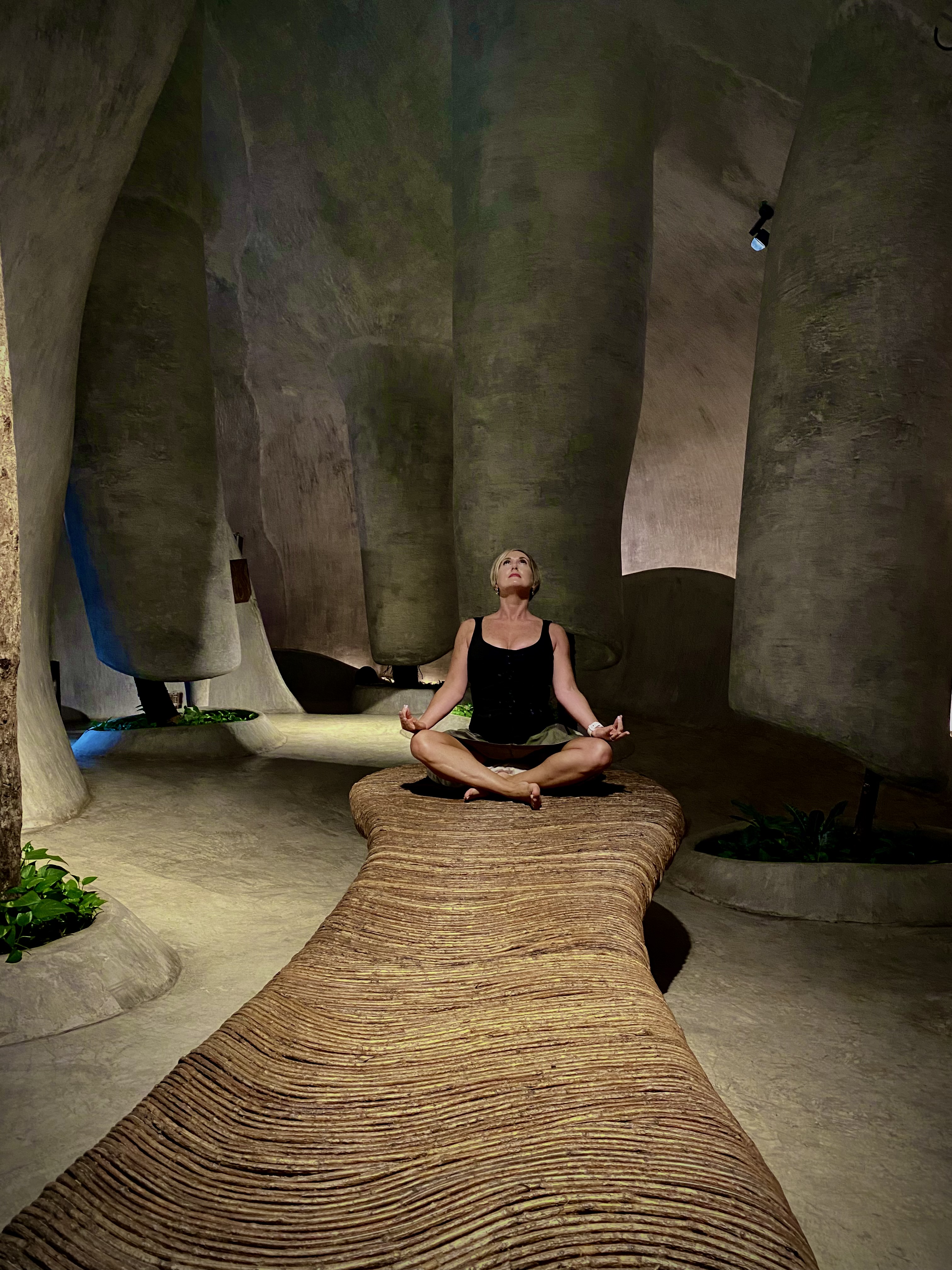

Did you know that it is said that we only use 10% of brains??!! Whether you believe it is truth or myth, I believe, and here is why…
First of all why do we only use 10% of brains?? Easy…we are conditioned at a very early age to see things a certain way which gives our brains a break because we don’t have to think about how to brush our teeth, for example. We just do it….and this goes for a TON of things…how you walk w/o thinking about it, how you respond to a certain stimulus, whether you like pink better than blue, etc….see my point…the list goes on & on. So we stop using a the majority of our brain and respond how we are conditioned to respond very early in life.
Which ultimately means there is HOPE! Hope that we have a CHOICE to change the way we respond…by becoming conscious (you have to go back to using that dormant part of your brain you haven’t used in awhile that drives your conditioning. Who says an old dog can’t learn new tricks?
There are many ways to do this…I have done this through yoga. But other ways are meditation, connecting to nature, challenging your beliefs, psychedelics, ASK WHY, Question the “Norm”, etc.

The Brain is VERY POWERFUL. It is more powerful than a supercomputer. You have only seconds to act. Accessing the signals coming from your eyes, your brain quickly calculates when, where, and at what speed…..Then it orders your muscles to respond. I don’t know about you but I am all about using MORE of it! The possibilities seem endless.
Now let’s talk about how Yoga changes our brain by helping us become conscious of our unconscious behavioral patterns or conditioning.
How Yoga Changes Your Mind
- Connects Your Body & Breathe
- Yoga teaches you to match your breathe w/ your movements. As you do this you start to relax….your nervous system relaxes which causes your thinking mind to shut off! This gives it a break from all that conditioning we have been talking about! We’ve all had one of those nights where we can’t shut our brain off…it is healthy to shut it down, you relax, you let go. As you start to do this more & more you become addicted to this relaxed soothed feeling of having your body & mind connected. You think more clearly and are more creative. You can think BEYOND your conditioning b/c you have shut it off. The neural pathways grow, expand and create new pathways.
- Teaches You To Pause Between Stimulus & Response
- Because you shut off your “conditioned” system of the brain you start to pause between stimulus & response so you can decide how you want to respond. You become less reactive. And, again, grow new neural pathways.

- Facilitates Deep Listening
- Deep Listening is especially present in Yin Yoga which is a style of yoga that you hold postures anywhere from 2-5 minutes. By doing this you get into the deep fascia tissue of the body. You are also learn how to sit still in uncomfortable postures. The process of keeping calm and staying still forces you to listen deeply. By listening deeply you identify why you respond the way you do and thus have the ability to change that conditioned response. Any practice that puts you in a flow or meditative state will accomplish this. I like Power Down, Deep Stretch because it incorporated Power Yoga which starts w/ uniting the body with the breath & get the heart rate up, which then clears the mind so you start w/ a clean slate and then switch to the Deep Stretch or Yin to “listen in”.
- Forces Your Brain to Use Your Other Senses
- Did you know that our Sight is our dominant sense. We use it as a default…which means we are using less of our brain as we use our sight to interpret the world around us. It’s no surprise that people who are born w/o sight develop great talents around their other senses….they are powerful…we just don’t use them. In yoga you have to Listen to the teacher’s cues which is why often the teacher does not do the class her/himself…they want to you to rely on your listening sense. You may even be told to shut your eyes…as you do this you are gaining 30% more power to your other senses. It is said that Sight takes up 30% of our sensing brain. A yoga teacher uses a lot of cueing to get you to tune into other senses. Try shutting your eyes during your yoga practice or when you need to pause before responding. Music is also often incorporated into yoga which tunes you into yet another sense. It helps….
- Affirmations/Intentions strengthen your brain’s Neuroplasticity which is the brain’s ability to adapt to situations
- Most yoga practice incorporate affirmations, an intention or gratitude into the practice. When you repeat positive statements, your brain can form new neural pathways that create physical connections to those thoughts. Over time, this makes it easier for your mind to return to positive thinking patterns instead of negative ones. This is SO important as it said that 80% of our thoughts are negative & 95% are repetitive! So you see how powerful this is & why are brains are lazy. Try this exercise: they next time you practice yoga, every time you think a negative thought…turn it into a positive! This not only helps neuroplasticity BUT helps you see & identify your negative thought patterns so you can change them.

- Better Understanding of the Body
- Connecting to your breath can help you shift your focus from how your body looks to how it feels and what it can do. This mindset shift can encourage you to rest when you need to and eat nourishing foods. You will find yourself reaching for that apple instead of another cookie.
- Emotional Benefits
- Your brain controls your emotion….so your could say: Control the Brain, Control Emotions. Slow breathing can decrease symptoms of depression, anger, anxiety, confusion, and arousal. Deep breathing can improve emotional state and levels of cortisol, a hormone associated with depression and anxiety. All of these mental disorders reside in the brain…by recovering you are chaining your brain chemistry.
- Brain Structure & Brain Function
- Studies using brain imaging technology have shown that people who regularly practice yoga have thicker cerebral cortexes and hippocampi than those who don’t. These areas of the brain are responsible for information processing, learning, and memory, and they typically shrink with age. However, older yoga practitioners show less shrinkage in these areas. Yoga can also increase activity in the anterior cingulate cortex and the medial prefrontal cortex, which are associated with empathy, gratitude, and kindness.
- Teaches the Brain to stay in the Present Moment (if you are anxious you are living in the past or the future: so you could say this is the cure for anxiety)
- As you you concentrate in a yoga class on your breathe and your body uniting (yoga means to “unite”) you have to stay in the Present Moment…you can’t be thinking about what you going to eat later, etc. As you do this more & more your brain starts to prefer this state (new brain chemistry) and you are able to stay longer and longer and even get on your mat more or more to get there. You really start to see things differently.

In Summary
I have noticed changes in my life after taking up a regular yoga practice. I am less reactive, have less anxiety and have identified thought patterns and conditioned responses that were no longer serving me in any positive way. The goal of yoga is to Let Go of those things that are no longer serving you and decide what you want out of life. If that is not enough, there are a lot of health benefits and brain benefits that go along with it.
Like anything in life you can’t go out and practice 1 time and expect to all the sudden “get it” and see the benefits. It does require commitment and consistency….which as you develop the commitment, the commitment becomes a habit…which is another change in your brain chemistry and neuroplasticity…which is also the key to healthy aging. Yes, our brain is aging too. But all the things above help to keep it young and building new connections!
I also want to shout out Lauren Eckstrom https://www.laureneckstrom.com/ as I have learned SO…much from her!! I have also had great mentors at GoYoga https://goyogausa.com/ I teach Power Down, Deep Stretch at GoYoga in Powell. https://goyogausa.com/location/powell/
Try it for yourself and let me know what changes you notice. What techniques do you use to keep your brain young?
For more like this join Life’s Apothecary or “medicine for the soul” by subscribing below.
Leave a Reply